When we open the Holy Quran, we aren't just reading a book; we are actively engaging with the direct, unchanged word of Allah (SWT). However, reading the words is only the first step. Reciting them *correctly*—giving every single letter its due right and proper characteristics—is a profound act of worship known as Tajweed.
In the school of the Ahl-ul-Bayt (AS), precise recitation has always been deeply emphasized. Imam Ali (AS) famously defined Tarteel (from the verse "And recite the Quran with measured recitation") specifically as "the clear articulation of letters and knowledge of where to pause."
Whether you are a beginner taking your first steps or someone looking to refine your pronunciation, understanding the core rules of Shia Tajweed is essential. Let's break down what makes Tajweed so important and look at its foundational pillars.
What Exactly is Tajweed?
Linguistically, Tajweed means "doing something well" or "proficiency." In the context of the Quran, it means giving every letter of the Arabic alphabet its rights and dues of characteristics when we recite.
"Decorate the Quran with your beautiful voices, for indeed a beautiful voice increases the beauty of the Quran."
- Prophet Muhammad (SAWA), referring to accurate and melodious recitation.
When you learn Tajweed, you ensure that you don't accidentally change the meaning of the Quranic text. In Arabic, changing a single letter—for example, reading a hard "Ha" (ح) as a soft "ha" (هـ)—can drastically alter the meaning of a word, potentially invalidating prayer if done purposefully or due to negligence in learning.
The Three Pillars of Correct Recitation
If you've ever felt overwhelmed by Tajweed rulebooks, don't worry. Our Yassarnal Quran Qaida Course breaks these down perfectly for beginners. But essentially, all Tajweed stems from three main areas:
1. Makharij al-Huroof (Articulation Points)
This is where the sound comes from. The Arabic language has specific articulation points in the throat, tongue, lips, and nasal cavity. For non-native speakers, distinguishing between similar-sounding letters is the biggest hurdle. For instance, the difference between 'Qaf' (ق) emitted from the deep back of the tongue, and 'Kaf' (ك) from slightly further forward, is vital.
2. Sifat al-Huroof (Characteristics of Letters)
This is how the sound is produced. Even if two letters come from the same place in your mouth, their characteristics separate them. Some letters require air to flow (Hams), while others trap the air (Jahr). Some are pronounced with a heavy, full mouth (Tafkheem), while others are light (Tarqeeq).
3. Ahkam al-Tajweed (Rules of Recitation)
This is how letters interact with each other when they are placed side-by-side. The most common rules you will encounter include:
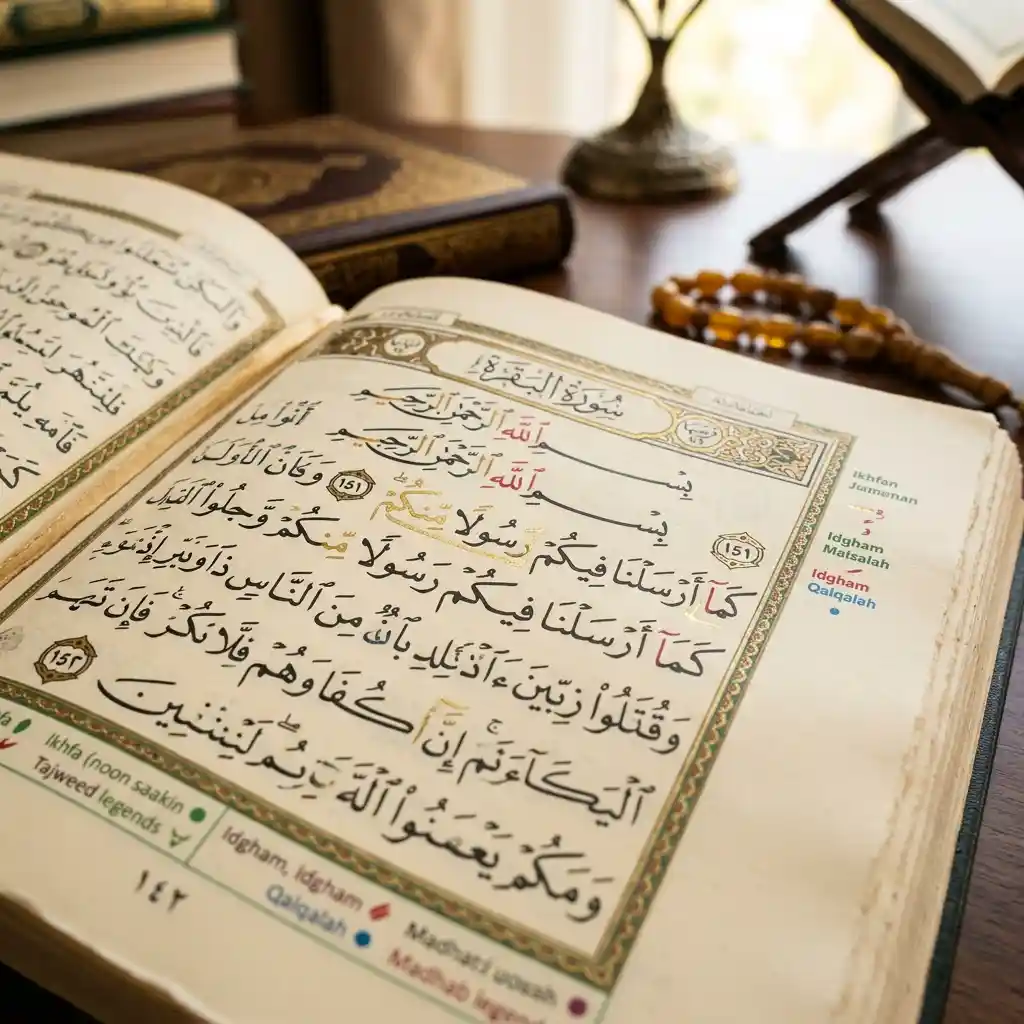
- Rules of Noon Sakinah and Tanween: How to pronounce a static 'N' sound when it meets other letters (Izhar, Idgham, Iqlab, Ikhfa).
- Rules of Meem Sakinah: The specific ways to pronounce a static 'M'.
- Ahkam al-Madd: The rules surrounding when and how long to stretch or elongate vowels. Sometimes you stretch a vowel for 2 counts, sometimes 4, 5, or even 6, depending on the letter that follows it.
Learning Tajweed According to Shia Tradition
A common question we receive is: "Are Shia Tajweed rules different?"
The short answer is no, the core phonetic rules of the Arabic language and the Quranic text remain exactly the same. We read according to the universally accepted transmission (Qira'at) of Hafs 'an 'Asim.
However, what differs is the spiritual approach and application in Fiqh (Jurisprudence). Within Shia Fiqh, following the rulings of our Marja' (Grand Ayatollahs), there are specific guidelines on what level of Tajweed is strictly Wajib (obligatory) during the daily prayers (Salat), and what is Mustahab (recommended) for general recitation. A qualified Shia teacher will guide you not just on how to pronounce the letters, but how to apply them correctly within your daily acts of worship.
How Can You Start Improving Today?
You cannot learn Tajweed simply by reading a blog post or a book; it requires hearing the sounds and having your own recitation corrected by an expert. It's an oral tradition passed down from teacher to student.
- Listen actively: Spend 10 minutes a day listening to renowned Qaris (reciters), specifically noting how they pronounce difficult letters like 'Dhad' (ض) and 'Ayn' (ع).
- Don't rush: Accuracy is far more beloved to Allah than speed. Read slowly and thoughtfully.
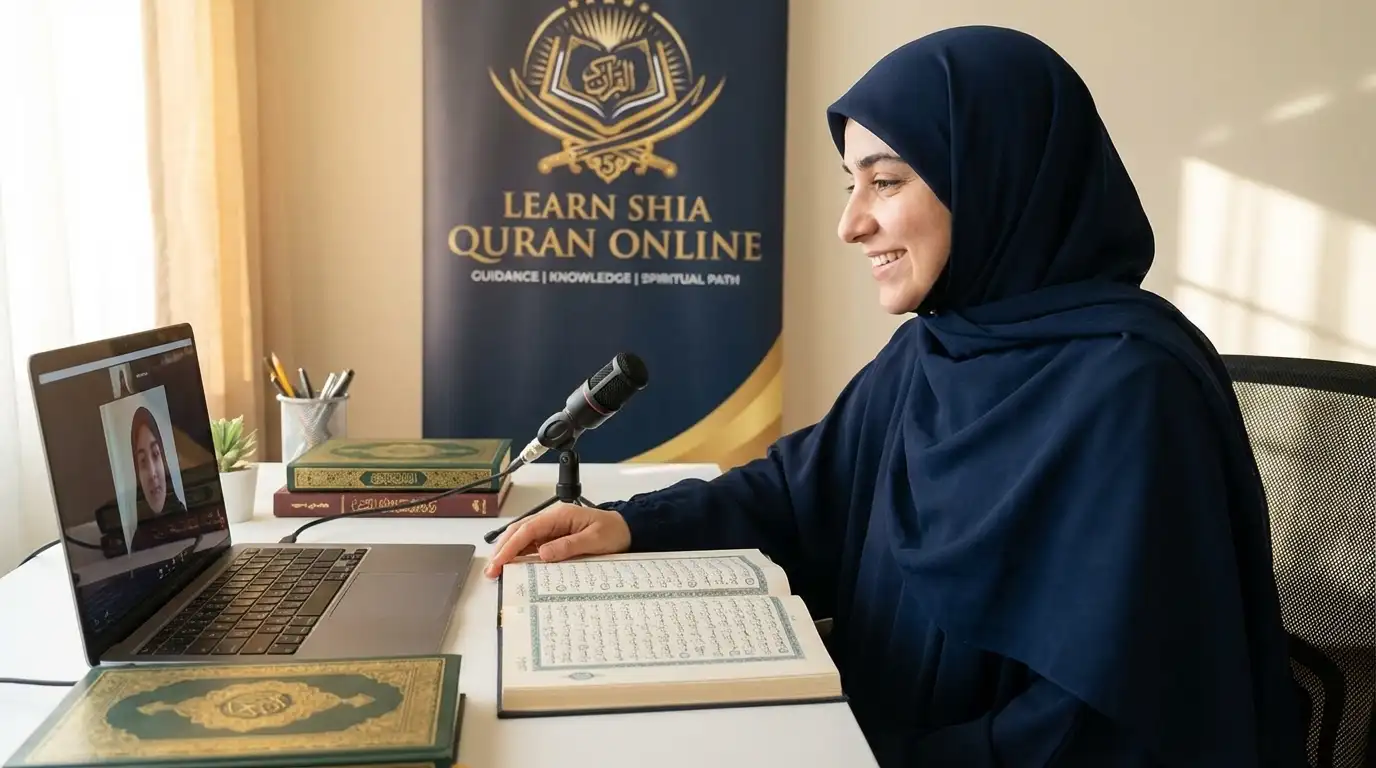
- Find a qualified Teacher: This is the most crucial step. Whether you are looking for a male Quran tutor or prefer the comfort of a female Shia teacher, having someone listen to you and correct your mistakes is irreplaceable.
If you're ready to start reciting the Quran the way it was revealed to the Prophet (SAWA) and recited by the Ahl-ul-Bayt (AS), we invite you to explore our comprehensive Shia Tajweed Course Online. It is tailored for all ages and levels, allowing you to learn from the comfort of your own home on a schedule that works for you.