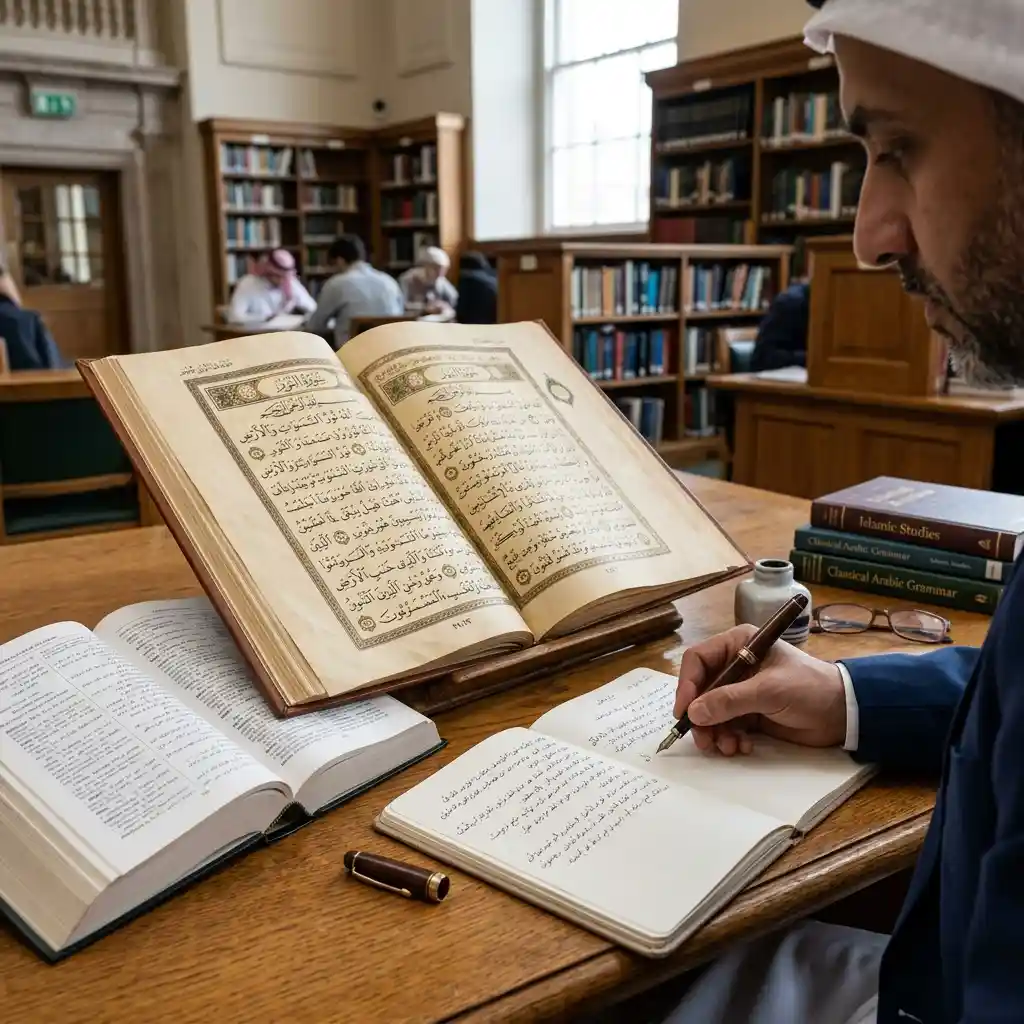
Reading a translation of the Holy Quran is a wonderful practice, but it is ultimately akin to viewing a masterpiece through a distorted lens. Translations provide the general meaning, but they fail to capture the profound eloquence, the subtle emotional shifts, and the majestic linguistics of the Arabic language.
For many non-native Muslim speakers, the idea of learning Arabic feels impossible. "I don't have years to study grammar," they say. The good news is: you do not need to become fluent in conversational, modern Arabic to profoundly transform your relationship with the Quran.
The Difference Between Fluency and Comprehension
There is a vast difference between being able to order food in a restaurant in modern standard Arabic and understanding the vocabulary of Allah (SWT). Quranic Arabic is highly patterned. In fact, if you learn just a few hundred high-frequency root words and understand basic grammatical structures (like pronouns and past/present tense verbs), you will begin to recognize 60% to 70% of the words you recite daily.
"Indeed, We have sent it down as an Arabic Qur'an that you might understand."
- Surah Yusuf (12:2)
Where Should You Start?
If you already know how to read the Arabic alphabet (perhaps through a Qaida Course), your next step is not necessarily a heavy grammar textbook. Instead, focus on these three areas:
1. Master the Pronouns
Arabic relies heavily on attached grammar. For example, knowing that "hu" (ه) means "his" or "him" instantly unlocks thousands of words in the Quran. Learn words like Ana (I), Nahnu (We), Anta (You).
2. The Three-Letter Root System
Almost all Arabic words derive from a three-letter root. For example, the letters 'Ayn - Lam - Meem' (ع - ل - م) relate to knowledge. From this root, we get Ilm (knowledge), Aalim (scholar), Taleem (education/teaching). Once you recognize the root, you can often guess the context of a new word.
3. Focus on Salaah First
Do not start by trying to translate Surah Al-Baqarah. Start with the words you say five times a day. What exactly does "Subhana Rabbiyal 'Adheemi wa Bihamdih" mean word-for-word? Once you understand your daily prayers in Arabic, your entire experience of Salaah will shift from vocal repetition to deep, conscious communication with your Creator.
The Learn Shia Quran Approach to Arabic
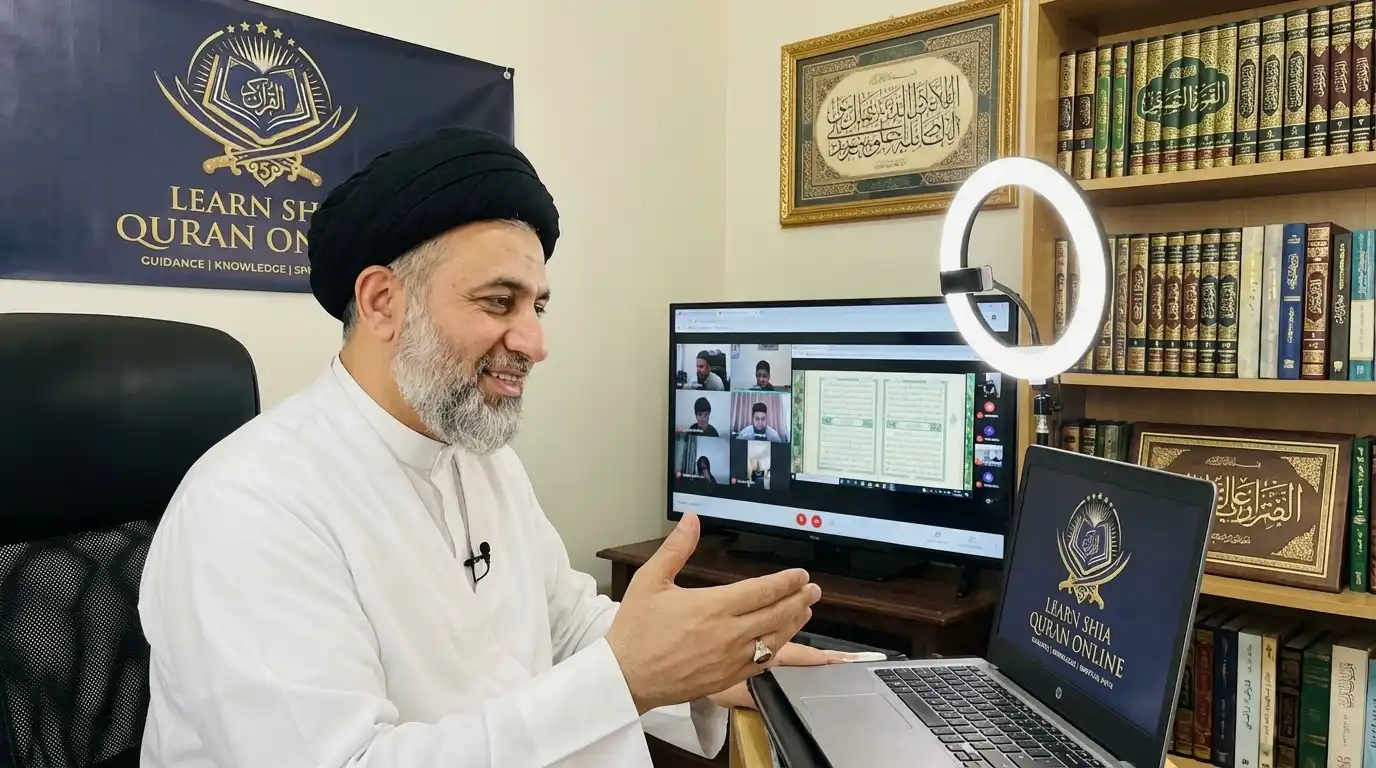
We understand that our students are busy. That is why our Islamic Studies and upcoming Arabic comprehension courses do not drill you with complex rules from day one. Instead, we use a vocabulary-first approach, focusing deeply on the words frequently used by the Ahl-ul-Bayt (AS) in their Duas (like Dua Kumayl) and in the Holy Quran.
By studying with a dedicated Shia teacher online, you can ensure that you are learning Arabic in the context of our beautiful faith tradition.
Take the first step toward true comprehension. Set up a free evaluation session today, and let us show you how quickly the words of the Quran can begin to make sense to your heart and mind.